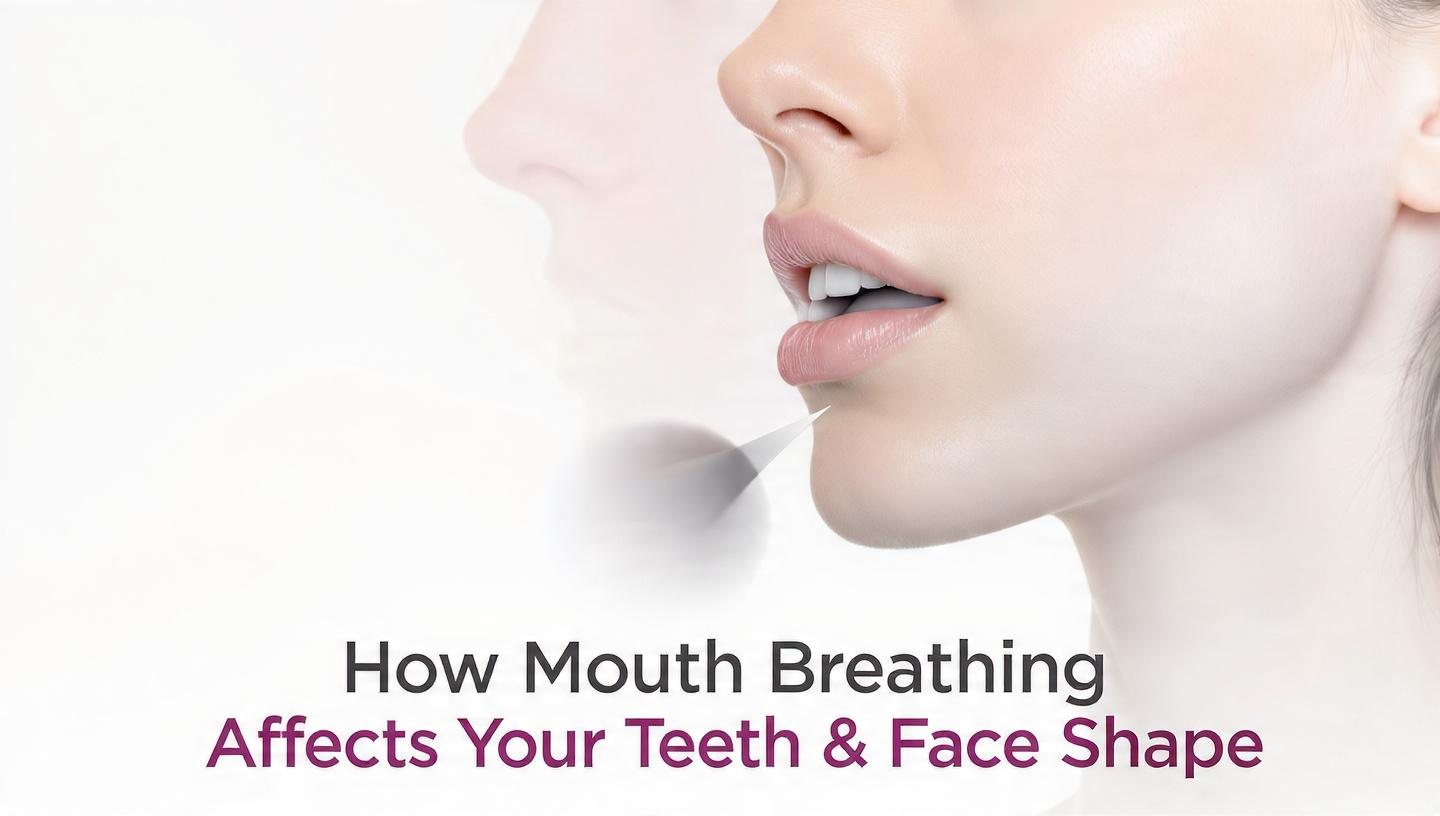
Most people don’t realize they breathe through their mouth — especially while sleeping. It may look harmless, but mouth breathing can affect your teeth, gums, jaw, and even the shape of your face over time. What starts as a simple habit can slowly develop into long-term dental and health issues.
Let’s break down how mouth breathing works, why it happens, and how it impacts both children and adults.
What Is Mouth Breathing?
Mouth breathing means you rely on your mouth instead of your nose for airflow. This can happen all the time or only during sleep. While it’s normal during heavy exercise or nasal blockage, mouth breathing becomes a problem when it turns into a daily habit.
Your nose plays an important role in filtering, warming, and humidifying the air you inhale. The mouth does none of this, which is why long-term mouth breathers experience several dental and facial issues.
Why Mouth Breathing Happens
Common reasons include:
- Nasal allergies
- Enlarged tonsils or adenoids
- Chronic sinus infections
- Deviated nasal septum
- Sleep apnea
- Habit developed in childhood
If the underlying cause isn’t treated, mouth breathing continues — and the side effects slowly appear.
Effects of Mouth Breathing on Teeth
1. Dry Mouth and Increased Cavities
Nasal breathing keeps your mouth moist. Mouth breathing dries it out, reducing saliva production.
Saliva is essential for:
- Neutralizing acids
- Washing away food particles
- Protecting enamel
A dry mouth makes your teeth more vulnerable to cavities, gum infections, and bad breath.
2. Crooked Teeth and Improper Jaw Growth
This is one of the most serious long-term effects.
Mouth breathing forces the tongue to rest low in the mouth instead of touching the palate. Without proper tongue support, the upper jaw narrows and teeth become crowded or crooked. This affects:
- Alignment of upper and lower teeth
- Bite strength
- Jaw shape
- Facial growth patterns (especially in children)
3. Gum Inflammation
Constant airflow through the mouth irritates the gums. Over time, this leads to swelling, redness, and early gum disease.
How Mouth Breathing Affects Face Shape
This is where most people get surprised.
Long-term mouth breathing — especially in children — can change facial structure, a condition known as “long-face syndrome.”
Common facial changes include:
✔ Narrow Face and Jaw
Because the tongue doesn’t support the upper jaw, it starts growing narrow and elongated.
✔ Open-Mouth Resting Position
The lips stay parted, which further weakens facial muscles.
✔ Droopy Cheeks and Tired Look
The cheeks lose natural muscle support due to improper breathing posture.
✔ Weak Chin or Recessed Jaw
The lower jaw may grow backward, making the chin appear smaller.
✔ Dark Circles and Fatigue
Poor sleep quality caused by mouth breathing leads to tired-looking eyes.
These changes can become permanent if the habit continues during childhood growth years.
Effects on Sleep and Overall Health
Mouth breathing doesn’t just affect appearance — it influences overall health.
- Poor sleep
- Snoring
- Daytime sleepiness
- Reduced oxygen absorption
- Difficulty focusing
- Increased risk of infections
Children may show symptoms such as poor school performance, irritability, slow growth, and behavioral concerns.
How to Know If You’re a Mouth Breather
You may be mouth breathing if you notice:
✔ Dry mouth on waking
✔ Chapped lips
✔ Snoring at night
✔ Frequent bad breath
✔ Crowded teeth
✔ Constantly open mouth
✔ Difficulty breathing through nose
If your child often sleeps with their mouth open, snores, or has crooked teeth, mouth breathing might be the cause.
Treatments for Mouth Breathing
The treatment depends on the underlying reason.
1. Treat Nasal or Sinus Problems
Doctors may recommend medication, allergy treatment, or nasal sprays to clear congestion.
2. Correct Enlarged Tonsils or Adenoids
For children, removing enlarged tonsils/adenoids often solves the problem completely.
3. Orthodontic Treatment
Dentists may suggest braces or expanders to widen the jaw and correct alignment issues.
4. Myofunctional Therapy
These are tongue and mouth exercises that help restore correct breathing posture.
5. Conscious Training
Adults can practice keeping lips closed and the tongue resting on the palate.
Final Thoughts
Mouth breathing may seem like a harmless habit, but its impact on dental health and facial development is significant — especially for children. Early detection and proper treatment can prevent crooked teeth, gum problems, and long-term facial changes. If you or your child shows signs of mouth breathing, seeking a dental evaluation is the first step toward healthier breathing and a healthier smile.