Tooth sensitivity is one of those problems almost everyone experiences at some point — a sudden sharp sensation when you sip something cold, bite into something sweet, or even breathe chilly air. While occasional sensitivity can be normal, persistent or severe sensitivity usually means something deeper is going on. Understanding why your teeth become sensitive and when it’s time to see a dentist can save you from bigger dental issues later.
What Is Tooth Sensitivity?
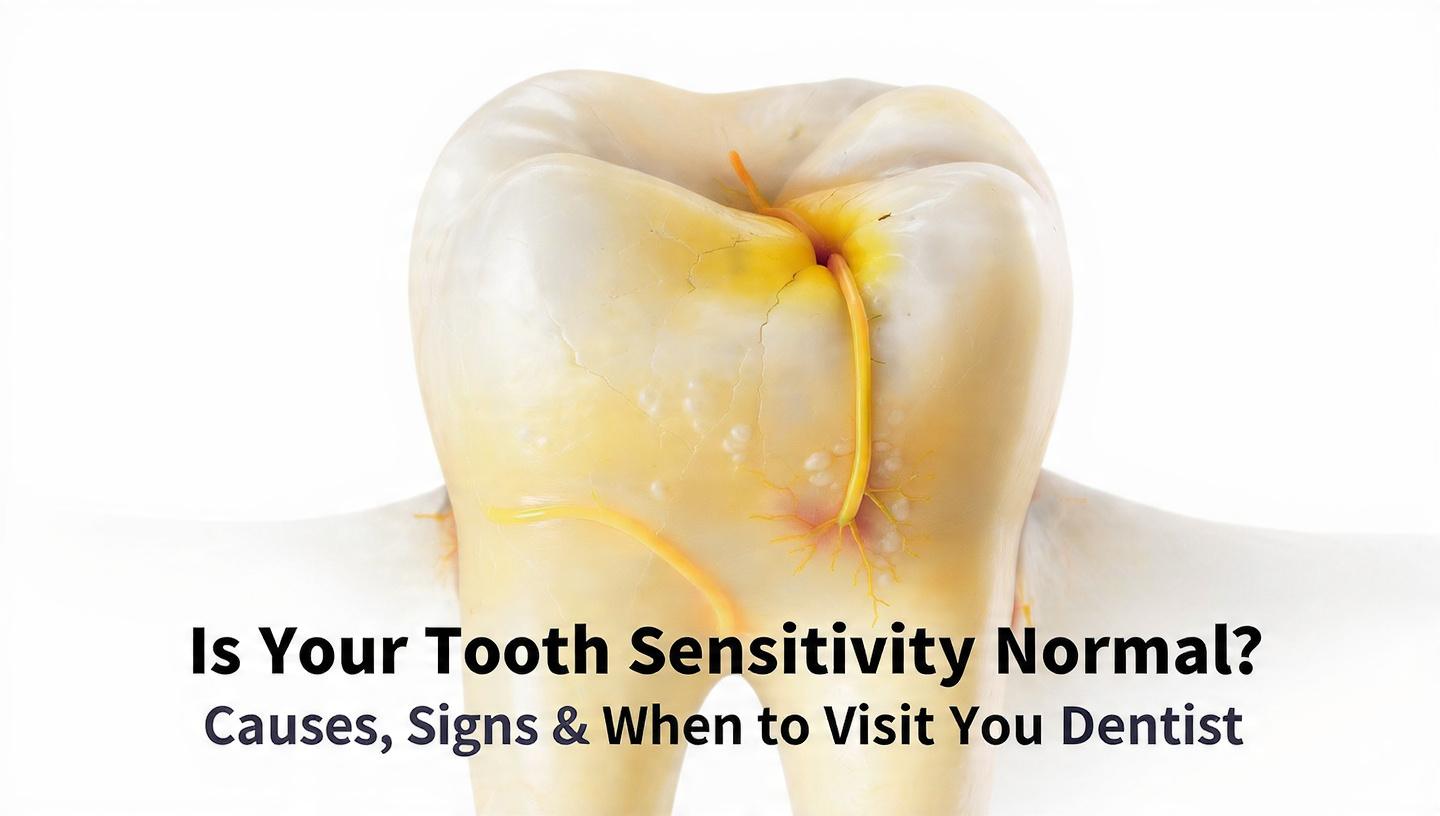
Tooth sensitivity, or dentin hypersensitivity, happens when the protective layer of your tooth becomes thinner or exposed. Beneath your enamel and cementum lies the dentin layer, which contains microscopic tubes connected to the tooth nerve. When dentin is exposed, cold, heat, sweetness, or pressure can trigger pain.
Sometimes it’s mild and temporary. Other times, it is a sign of underlying problems like gum recession, cavities, or enamel erosion.
Common Causes of Tooth Sensitivity
To treat sensitivity effectively, it’s important to understand its source. Here are the most common causes:
1. Enamel Erosion
The enamel protects your tooth, but once it starts wearing away, dentin exposure begins.
Causes include:
- Acidic foods and drinks
- Excessive soft drinks
- Citrus fruits
- Aggressive brushing
This is one of the biggest culprits behind cold sensitivity.
2. Gum Recession
When your gums pull back, the tooth roots become exposed. Since roots do not have enamel, even minor temperature changes can cause sharp pain.
Gum recession can happen due to:
- Gum disease
- Overbrushing
- Age
- Smoking
3. Tooth Decay or Cavities
Cavities don’t always hurt in the early stages, but when they get deeper, they cause sensitivity — especially to sweet foods or cold drinks.
4. Cracked or Chipped Tooth
A hairline crack can leave the dentin exposed, causing sensitivity and discomfort when chewing.
5. Worn Dental Fillings
Old or leaking fillings can expose the sensitive parts of your tooth.
6. Whitening Treatments
Professional or at-home whitening may cause temporary sensitivity due to active bleaching agents. This is normal and usually fades within a few days.
Is Tooth Sensitivity Normal?
Occasional sensitivity — especially from weather changes or whitening procedures — is normal. However, sensitivity is NOT normal when:
- It happens every day
- The pain is sharp or sudden
- Cold or sweet foods instantly cause discomfort
- You feel sensitivity even while brushing
- Hot foods cause lingering pain
- The sensitivity is getting worse over time
If your sensitivity lasts longer than 7–10 days, it’s better to get it evaluated by a dentist.
When to See a Dentist for Sensitive Teeth
Tooth sensitivity is your tooth’s way of telling you something is wrong. You should visit a dentist if:
✔ Sensitivity occurs around only one tooth
✔ You see gum recession
✔ You notice visible cavities or dark spots
✔ Chewing causes pain
✔ Your old filling feels uneven
✔ Sensitivity is waking you up at night
✔ Pain lingers after hot foods
These signs may indicate decay, cracks, infection, or gum problems that need treatment.
How Dentists Treat Tooth Sensitivity
The treatment depends on the cause. Here are some common solutions:
1. Desensitizing Toothpaste
Helps block pain signals and strengthen enamel. Works best when used consistently.
2. Fluoride Treatment
Fluoride strengthens enamel and reduces dentin exposure.
3. Dental Filling or Bonding
For sensitivity caused by cavities or cracks.
4. Gum Treatment
Scaling, root planing, or gum therapy helps reverse recession caused by gum disease.
5. Night Guard for Teeth Grinding
If sensitivity happens because you grind or clench your teeth at night, a night guard prevents further enamel wear.
6. Root Canal (Only If Needed)
If sensitivity is caused by nerve damage or deep infection, root canal treatment is the final solution — and it stops pain permanently.
Tips to Reduce Tooth Sensitivity at Home
Here are dentist-approved habits to prevent sensitivity:
✔ Use a soft-bristle toothbrush
✔ Brush gently — avoid hard pressure
✔ Switch to fluoride-rich toothpaste
✔ Avoid acidic foods and drinks
✔ Rinse your mouth with water after meals
✔ Avoid frequent snacking
✔ Use warm water instead of cold when brushing
These small changes help protect your enamel and reduce discomfort over time.
Final Thoughts
Tooth sensitivity might feel like a minor issue, but it is often an early warning sign that your teeth or gums need attention. While occasional sensitivity is normal, persistent discomfort should never be ignored. With early diagnosis and proper care, sensitive teeth can be treated easily and effectively.
If you’re experiencing regular sensitivity, scheduling a dental checkup is the safest step. Early treatment not only solves the discomfort but also protects your teeth from further damage.